About this Ohio practice test
This free Ohio permit practice test is built like the real BMV knowledge test: 40 multiple-choice questions, and you need 30 correct (75%) to pass. Every question was written from the official Digest of Ohio Motor Vehicle Laws, and each answer explains the rule and the section it comes from.
You don't need to sign up. Take the test below to see where you stand, then use the guide to learn how the BMV test works, what to bring, and which rules Ohio test takers miss most often.
How the Ohio BMV knowledge test works
Before you can get a temporary instruction permit (TIPIC), you must pass a vision screening and the knowledge test. The test has 40 multiple-choice questions about Ohio traffic laws and road signs, and you need a score of 75%, which is 30 correct answers.
You can take it online through BMV Online Services (2 attempts per 6 months), at a BMV Driver Examination Station, or at select Deputy Registrar license agencies. The Digest says the test covers Sections 2 through 10 of the manual: before you drive, being alert, rules of the road, learning to drive, state laws and penalties, special driving situations, safe driving tips, sharing the road, and emergencies.
If you fail, you must wait one day before retesting. The Digest doesn't state a time limit, so don't plan around one. Read each question to the end before you choose.
Who can take the test and get a TIPIC
In Ohio you can take the vision screening and knowledge test at 15 years and 6 months. After you pass, you buy your TIPIC at a Deputy Registrar license agency within 60 days. If you wait longer, you have to retake the vision screening and knowledge test.
If you are under 18, a parent or guardian must co-sign your application.
What to bring
The BMV asks you to prove who you are and where you live. Bring original documents for each of these:
- Proof of your full legal name
- Proof of your date of birth
- Your Social Security number (if you have one)
- Proof of U.S. citizenship or legal presence
- Proof of your Ohio street address (two documents if you want a federally compliant card)
How much it costs
We couldn't confirm the current TIPIC and testing fees from an official source, so we don't list a number here. Check the Ohio BMV website or ask your Deputy Registrar before you go.
TIPIC rules for new drivers
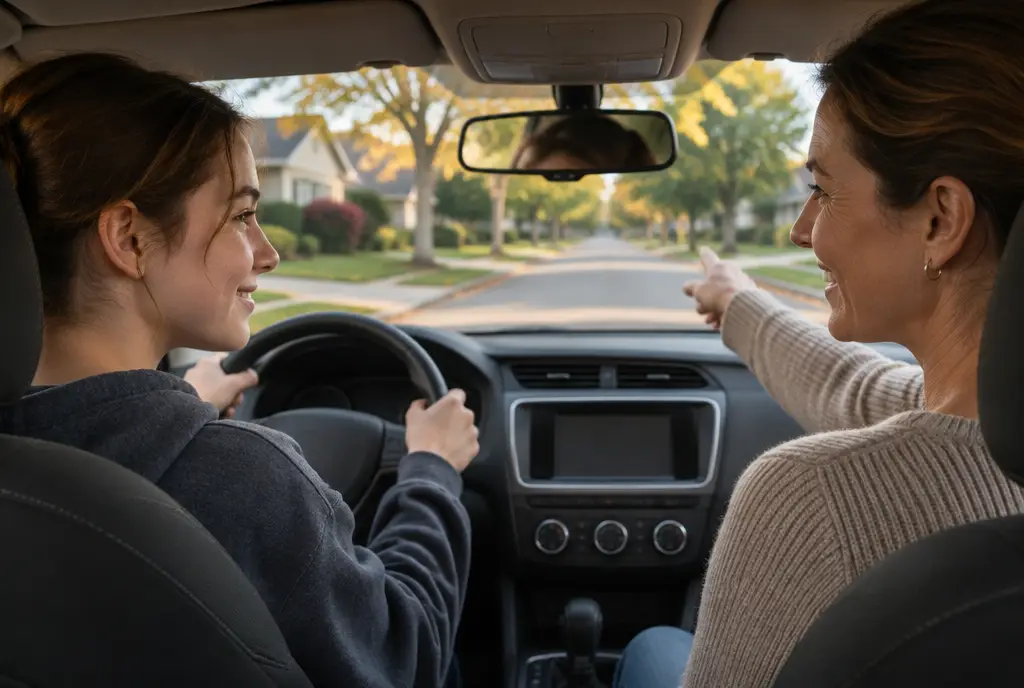
With a TIPIC you may only drive with a supervising driver. Who that can be depends on your age:
- Under 16: the person in the front passenger seat must be your parent, guardian, custodian, a licensed driving instructor, or an adult 21 or older acting in place of a parent.
- Ages 16 and 17: any licensed driver 21 or older, except from midnight to 6 a.m., when it must be your licensed parent, guardian or custodian.
- Every age: no use of any mobile electronic device while driving, everyone must wear a seat belt, and you can't carry more people than there are seat belts.
- Before your road test (under 18): hold the TIPIC at least 6 months, log 50 hours of driving including 10 at night, and finish driver education (24 hours of classroom or online instruction plus 8 hours behind the wheel).
How to study for the Ohio permit test
Start with the Digest of Ohio Motor Vehicle Laws. It's free online, and the test comes straight from Sections 2 through 10. Read it once, then take a practice test. For every question you miss, go back and reread that section, not just the answer.
Pay close attention to numbers. Many Ohio questions ask for exact distances, speeds and ages, and the wrong answers are usually close to the right one.
Top topics on the Ohio test
Speed limits
Ohio's limits depend on the type of road: 20 mph in school zones during recess and arrival or dismissal, 25 mph on streets in a municipality, up to 70 mph on rural freeways.
Road signs
Know signs by shape and color as well as by words. You'll see regulatory, warning, guide and work-zone signs.
Sharing the road
School buses, the Move Over law, slow-moving vehicles, and keeping at least 3 feet from bicycles.
Parking
Ohio's distances: at least 10 feet from a fire hydrant, at least 20 feet from an intersection or crosswalk, and within 12 inches of the curb.
Alcohol & drugs
The legal limit is .08% for drivers 21 and older and .02% for drivers under 21.
Licensing rules
Who can supervise you, the midnight-to-6 a.m. rule, and the ban on electronic devices for new drivers.
Common mistakes
Getting the school bus rule backwards
On a road with fewer than four lanes, traffic from both directions must stop at least 10 feet from a school bus that is loading or unloading. On a road with four or more lanes, only traffic going the same direction as the bus must stop.
Confusing parking distances
Ohio's numbers are 10 feet from a fire hydrant and 20 feet from an intersection or crosswalk. Other states use different numbers, so make sure you study Ohio's.
Assuming hands-free is fine
TIPIC holders and drivers under 18 may not use any electronic device while driving, not even hands-free.
Stopping at the wrong place at railroad crossings
When a train is coming, stop no closer than 15 feet and no farther than 50 feet from the crossing.
Forgetting the under-21 alcohol limit
For drivers under 21 the limit is .02%, not .08%.
All 40 free test questions and answers
Want to study without the quiz? Here is every question from the free practice test above, with the correct answer and explanation.
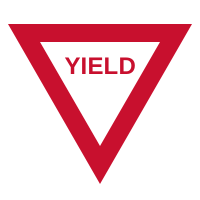
What does this sign tell you to do?
- A. Come to a full stop every time, even if no one is coming
- B. Slow down, yield to oncoming traffic, and stop only if other traffic would be affected (correct)
- C. Speed up and merge ahead of other traffic
- D. Turn around because the road ends ahead
A yield sign means stop only if other traffic is affected and yield to all oncoming traffic (Digest of Ohio Motor Vehicle Laws, Section 4).
You planned to turn right at a corner, but this sign is posted there. What should you do?
- A. Turn right after coming to a full stop
- B. Turn right only when the light is red
- C. Skip the right turn there and use another route (correct)
- D. Turn right if no pedestrians are nearby
The red circle with a slash means the action shown, a right turn, is prohibited (Digest of Ohio Motor Vehicle Laws, Section 4).
What does this sign with two arrows pointing in opposite directions tell you?
- A. A divided highway begins ahead
- B. You are entering a one-way road
- C. An extra passing lane opens ahead
- D. Traffic ahead travels in opposite directions (correct)
This warning sign means traffic travels in opposite directions on the road ahead (Digest of Ohio Motor Vehicle Laws, Section 4).
What does this orange sign tell you?
- A. The road is permanently closed
- B. Road work is being done ahead (correct)
- C. A detour to a rest area is ahead
- D. You may speed up after this point
This orange work zone sign warns that road work is being done ahead (Digest of Ohio Motor Vehicle Laws, Section 4).
What color and shape are most warning signs?
- A. Red with white letters, eight-sided
- B. White with black letters, rectangular
- C. Green with white letters, square
- D. Yellow with black letters or symbols, diamond-shaped (correct)
Warning signs are usually yellow with black lettering or symbols and are diamond-shaped (Digest of Ohio Motor Vehicle Laws, Section 4).
There is a solid double yellow line on your road. When may you cross it?
- A. Whenever no oncoming traffic is in sight
- B. To turn left, or to pass a slow-moving vehicle such as a bicycle (correct)
- C. Only when the car ahead is going under the speed limit
- D. Never, under any circumstances
Do not drive left of a solid double yellow line unless you must cross it to turn left or to pass a slow-moving vehicle such as a bicycle (Digest of Ohio Motor Vehicle Laws, Section 4).
A traffic light is flashing yellow. What should you do?
- A. Come to a complete stop and wait
- B. Speed up before it turns red
- C. Slow down and go ahead with caution (correct)
- D. Treat it as a green light and keep your speed
At a flashing yellow light, slow down, proceed with caution, and be ready to stop for traffic entering the intersection (Digest of Ohio Motor Vehicle Laws, Section 4).
You and another driver reach a four-way intersection at the same time. Who should go first?
- A. The driver on the right (correct)
- B. The driver on the left
- C. The driver going faster
- D. Whoever honks first
At a four-way intersection, yield to the driver on your right if you both arrive at the same time (Digest of Ohio Motor Vehicle Laws, Section 4).
You are on an entrance ramp to an interstate. Who must yield?
- A. You must yield to traffic already on the highway (correct)
- B. Highway traffic must make room for you
- C. Whoever is in the right lane must stop
- D. No one has to yield on a ramp
Drivers on an entrance or acceleration ramp must yield to drivers already on a limited access or interstate highway (Digest of Ohio Motor Vehicle Laws, Section 4).
A fire truck with lights and siren is on the other side of a divided highway, going the opposite way. Must you pull over and stop?
- A. No, the stop rule does not apply when it is going the opposite way on a divided highway (correct)
- B. Yes, all traffic must always stop
- C. Yes, but only if you are in the left lane
- D. No, but you must turn on your hazard lights
Drivers must pull right and stop for an approaching public safety vehicle unless it is traveling in the opposite direction on a divided highway (Digest of Ohio Motor Vehicle Laws, Section 5).
What must you do at a flashing red traffic light?
- A. Come to a complete stop, then go when no traffic is crossing your path (correct)
- B. Slow down and go without stopping
- C. Stop only if a car is coming from the left
- D. Wait until the light turns green
At a flashing red light, stop completely before entering and make sure no traffic is crossing your path (Digest of Ohio Motor Vehicle Laws, Section 4).
No sign forbids it, and you want to turn right on a red light. What must you do first?
- A. Stop fully and yield to all crossing traffic and pedestrians (correct)
- B. Slow down and turn if no cars are coming
- C. Wait for the light to turn green
- D. Honk to warn pedestrians, then turn
You may turn right on red unless a sign prohibits it, but you must stop completely and let crossing traffic and pedestrians clear (Digest of Ohio Motor Vehicle Laws, Section 5).
A school bus is stopped with red lights flashing on a road with fewer than 4 lanes. Which drivers must stop?
- A. All traffic from both directions, at least 10 feet from the bus (correct)
- B. Only traffic behind the bus
- C. Only traffic coming toward the bus
- D. No one, if no children are visible
On a road with fewer than 4 lanes, all traffic approaching from either direction must stop at least 10 feet from the bus (Digest of Ohio Motor Vehicle Laws, Section 5).
What is the speed limit in an alley inside a city or village in Ohio?
- A. 10 mph
- B. 15 mph (correct)
- C. 20 mph
- D. 25 mph
Ohio's speed limit for alleys within a municipal corporation is 15 mph (Digest of Ohio Motor Vehicle Laws, Section 4).
What is the speed limit on a freeway with paved shoulders inside a city or village?
- A. 45 mph
- B. 65 mph
- C. 55 mph (correct)
- D. 70 mph
Freeways with paved shoulders inside municipal corporations have a 55 mph limit (Digest of Ohio Motor Vehicle Laws, Section 4).
What can happen if you speed in a work zone?
- A. Only a written warning
- B. A smaller fine than usual
- C. Nothing, if no workers are present
- D. Your fine can be doubled, and you could face jail time (correct)
Consequences for speeding in a work zone can include doubled fines and jail time (Digest of Ohio Motor Vehicle Laws, Section 4).
When you parallel park next to a curb, how close must your car be?
- A. No more than 12 inches from the curb (correct)
- B. No more than 24 inches from the curb
- C. No more than 18 inches from the curb
- D. Exactly 3 feet from the curb
Vehicles must be parked parallel to and not more than 12 inches from the curb (Digest of Ohio Motor Vehicle Laws, Section 5).
You find an open spot 15 feet from a marked crosswalk in the middle of a block. Can you park there?
- A. Yes, the limit is 10 feet
- B. No, you must be more than 20 feet from a crosswalk (correct)
- C. Yes, crosswalk rules apply only at corners
- D. Yes, if you leave your hazard lights on
Stopping, parking, or standing is not allowed in or within 20 feet of a crosswalk (Digest of Ohio Motor Vehicle Laws, Section 5).
You must park on a hill next to a curb. Which way should you turn your front wheels?
- A. Straight ahead
- B. Toward the middle of the road
- C. Toward the curb side of the road (correct)
- D. It does not matter
When parking on a hill or grade, turn the front wheels toward the curb side of the road to stabilize the vehicle (Digest of Ohio Motor Vehicle Laws, Section 5).
Your car starts to skid. What should you do?
- A. Brake as hard as you can
- B. Turn the wheel the opposite way from the skid
- C. Speed up to regain control
- D. Ease off the brake or gas and turn the wheel into the skid (correct)
When you begin to skid, release pressure from the brake or accelerator and turn the wheel into the skid (Digest of Ohio Motor Vehicle Laws, Section 10).
In Ohio, a driver 21 or older is breaking the law if their blood-alcohol concentration (BAC) is at or above what level?
- A. .08% (correct)
- B. .10%
- C. .12%
- D. .15%
It is illegal to drive with a BAC of .08% or higher at any age (Digest of Ohio Motor Vehicle Laws, Section 6).
A first-time driver tests over the legal limit after an OVI arrest. How long is the Administrative License Suspension?
- A. One year
- B. 90 days (three months) (correct)
- C. Two years
- D. Seven days
A first test over the limit results in a three-month (90-day) license suspension (Digest of Ohio Motor Vehicle Laws, Section 6).
How can alcohol and drugs affect a driver's vision?
- A. They make vision sharper at night
- B. They only affect color vision
- C. They can blur vision and make it harder to judge distance and speed (correct)
- D. They have no effect on vision
Alcohol and drugs may blur vision and reduce your ability to judge distance, speed and the movement of other vehicles (Digest of Ohio Motor Vehicle Laws, Section 3).
Which prescription drugs does the Digest warn can affect safe driving?
- A. Only illegal drugs
- B. Vitamins only
- C. None, if a doctor prescribed them
- D. Sleep aids and sedatives (correct)
Prescription drugs such as antidepressants, pain reducers, sleep aids and sedatives can affect safe driving (Digest of Ohio Motor Vehicle Laws, Section 6).
Using the fixed-point count, you are following too closely if you pass the point before counting how many seconds?
- A. One
- B. Two
- C. Four (correct)
You are following too closely if you pass the stationary point before counting four seconds (Digest of Ohio Motor Vehicle Laws, Section 8).
At 50 mph on dry pavement with good brakes, about how far does it take to brake to a stop?
- A. About 158 feet (correct)
- B. About 50 feet
- C. About 80 feet
- D. About 400 feet
At 50 mph on dry pavement with good brakes, braking can take about 158 feet (Digest of Ohio Motor Vehicle Laws, Section 8).
It is a light drizzle at noon and your wipers are running. What must you do with your headlights?
- A. Turn them on (correct)
- B. Leave them off since it is daytime
- C. Use only parking lights
- D. Flash them every minute
Headlights must be on any time windshield wipers are in use because of precipitation (Digest of Ohio Motor Vehicle Laws, Section 7).
Your car starts to hydroplane on a wet road. What should you do?
- A. Brake hard right away
- B. Slowly ease your foot off the gas pedal (correct)
- C. Speed up to get through the water
- D. Turn the wheel sharply
When hydroplaning, slowly ease your foot off the gas pedal (Digest of Ohio Motor Vehicle Laws, Section 8).
What happens to fines for using a handheld phone while driving if the violation occurs in a work zone?
- A. They are waived
- B. They are doubled (correct)
- C. They are cut in half
- D. They stay the same
Distracted-driving fines are doubled if the violation occurs in a work zone (Digest of Ohio Motor Vehicle Laws, Section 3).
From how far away must a vehicle's brake lights be visible when the brakes are applied?
- A. 50 feet
- B. 500 feet (correct)
- C. 200 feet
- D. 1,000 feet
A vehicle needs two red stop lights visible from 500 feet when the brakes are applied (Digest of Ohio Motor Vehicle Laws, Section 2).
How should a lap belt fit?
- A. Loose across the stomach
- B. High across the ribs
- C. Snug and low across the hips (correct)
- D. Under the thighs
Adjust the lap belt so it is snug and lies low across your hips (Digest of Ohio Motor Vehicle Laws, Section 2).
What restraint does Ohio law require for a 10-year-old passenger?
- A. No restraint
- B. A rear-facing car seat
- C. A safety belt (correct)
- D. A child must sit on a pillow
Children at least 8 but not older than 15 must be restrained with a safety belt (Digest of Ohio Motor Vehicle Laws, Section 6).
What is the minimum age to take the Ohio knowledge test?
- A. 14 years
- B. 16 years
- C. 15 years exactly
- D. 15 years and 6 months (correct)
At 15 years and six months, you meet the minimum age for the vision screening and knowledge test (Digest of Ohio Motor Vehicle Laws, Section 1).
A 15-year-old TIPIC holder wants to practice. Who may sit in the front passenger seat?
- A. A licensed driving instructor (correct)
- B. A licensed 18-year-old sibling
- C. Any friend with a license
- D. No one, if the road is quiet
Under 16, the front seat must hold a parent, guardian, custodian, licensed driving instructor, or a person 21+ acting in loco parentis (Digest of Ohio Motor Vehicle Laws, Section 1).
Can a TIPIC holder use a phone to make a call while driving?
- A. Yes, if it is hands-free
- B. No, any mobile electronic device use is prohibited (correct)
- C. Yes, at red lights only
- D. Yes, if the supervisor allows it
TIPIC holders are prohibited from using any mobile electronic device while driving (Digest of Ohio Motor Vehicle Laws, Section 1).
A 16-year-old is stopped in a traffic jam. May they text?
- A. Yes, if fully stopped
- B. Yes, using voice-to-text
- C. No, device use is illegal even when stopped in traffic (correct)
- D. Yes, if the jam lasts over 5 minutes
Drivers under 18 may not use any electronic device while driving, even hands-free, at a light or in a traffic jam (Digest of Ohio Motor Vehicle Laws, Section 3).
When passing a bicyclist, how much space should you keep between your vehicle and the bicycle?
- A. At least 1 foot
- B. At least 6 inches
- C. No set space
- D. At least 3 feet (correct)
Keep a safety zone of at least three feet between a motor vehicle and a bicycle (Digest of Ohio Motor Vehicle Laws, Section 9).
You are beside a large truck and cannot see the driver's face in its side mirror. What does this mean?
- A. The driver cannot see you (correct)
- B. The truck is about to stop
- C. You are at a safe distance
- D. The driver is not in the truck
If you cannot see the driver's face in the side-view mirror, the driver cannot see you (Digest of Ohio Motor Vehicle Laws, Section 9).
An ambulance with lights and siren is coming up behind you. What must you do?
- A. Speed up to stay ahead
- B. Pull to the right side of the road and stop (correct)
- C. Stop where you are in the lane
- D. Pull to the left and keep driving
Pull to the right and stop until the emergency vehicle has passed (Digest of Ohio Motor Vehicle Laws, Section 9).
A pedestrian with a white cane is crossing the street. Who has the right-of-way?
- A. The driver
- B. Whoever arrives first
- C. The pedestrian (correct)
- D. Only the driver with a green light
Pedestrians who are blind or visually impaired, carrying a white cane or using a guide dog, have the right-of-way (Digest of Ohio Motor Vehicle Laws, Section 9).
Ohio permit test FAQ
How many questions are on the Ohio permit test?
The Ohio BMV knowledge test has 40 multiple-choice questions. You need 75%, or 30 correct, to pass.
Can I take the Ohio permit test online?
Yes. You can take it online through BMV Online Services (two attempts in six months), at a BMV Driver Examination Station, or at select Deputy Registrar license agencies.
How old do you have to be to get a permit in Ohio?
You can take the knowledge test and get a TIPIC at 15 years and 6 months.
What happens if I fail the Ohio permit test?
If you fail, you must wait one day before retesting.
What do I need to bring to get my TIPIC?
Proof of your full legal name, date of birth, Social Security number (if you have one), citizenship or legal presence, and Ohio address. A parent or guardian must co-sign if you are under 18.
How long do I have to hold my permit in Ohio?
If you are under 18, you must hold your TIPIC for at least 6 months and log 50 hours of driving, including 10 at night, before the road test.
Are these the real BMV test questions?
No. The BMV doesn't publish its test questions. Ours are original questions written from the Digest of Ohio Motor Vehicle Laws, in the same format and with the same pass mark as the real test.
Official sources
- Digest of Ohio Motor Vehicle Laws
- Digest Section 1: How to Get Your Driver License
- BMV Online Services (online knowledge test)
- BMV identity documents (linked from the Digest)
- Find a BMV office
- OTSO TIPIC resource sheet
Rules change. Always confirm details with the Ohio Bureau of Motor Vehicles before your test.